Showing posts with label bacteria. Show all posts

Thursday, August 01, 2024

Understanding Bacteria: Classification, Movement, Reproduction, and Impact

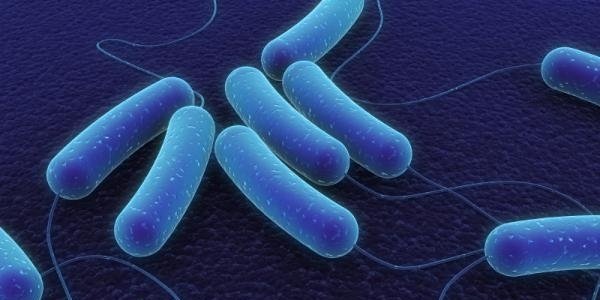
Bacteria are primarily classified into three groups based on their shape: spherical (coccus), rodlike (bacillus), and spiral or corkscrew-shaped (spirochete). This classification aids in understanding their diverse functions and behaviors. The internal contents of bacteria, known as cytoplasm, are enclosed within a cell membrane surrounded by a rigid cell wall, providing structural integrity and protection. Additionally, many bacteria produce a thick, jellylike material on the surface of their cell walls. When this material forms a distinct outer layer, it is referred to as a capsule, which enhances their ability to evade the host's immune system and increases their virulence.

Movement in bacteria is facilitated by structures called flagella in many rod, spiral, and comma-shaped bacteria. These whiplike appendages enable bacteria to swim by waving them back and forth. Some bacteria, however, move by wiggling their entire bodies, while others remain stationary.

Reproduction in bacteria most commonly occurs through fission, a process where a single cell divides to produce two identical cells. This process can occur rapidly, with division times ranging from 15 minutes to 16 hours, depending on the bacterium and environmental conditions. The rate of bacterial growth is influenced by factors such as moisture, temperature, and pH levels. Optimal growth conditions vary, with some bacteria thriving in extreme environments such as hot springs or acidic lakes, showcasing their remarkable adaptability.

Advancements in microbiology have shed light on the critical roles bacteria play in ecosystems, health, and industry. For instance, beneficial bacteria in the human gut are essential for digestion and immunity. Conversely, pathogenic bacteria can cause diseases, emphasizing the importance of understanding bacterial characteristics for developing effective treatments and preventive measures. As research progresses, our ability to harness and combat bacteria continues to evolve, highlighting their profound impact on life and science.
Understanding Bacteria: Classification, Movement, Reproduction, and Impact

Saturday, October 16, 2021

Agar media for bacteria culture

Agar is a polysaccharide derived from red seaweed (Rhodophyceae) and is used as solidifying agent for culture media in petri plates, slants, and deeps. Used in concentration of 2–3%. It melts at 98°C and solidifies at 42°C.

It is preferred for culture the bacteria because it is an inert, non-nutritive substance. The agar provides a solid growth surface for the bacteria, upon which bacteria reproduce until the bacterial colonies are form. Colony is a visible growth of microbes on the surface of a solid medium. It is a population of cells arising from a single cell or spore or from a group of attached cells.

These colonies can be used to help identify the organism, purify the strain free of contaminants and produce a pure genetic clone.

Type of agar used in microbiology:
Nutrient Agar
Blood Agar
Chocolate Agar or Heated Blood agar
MacConkey Agar
Mueller Hinton Agar
Tellurite Blood Agar
Agar media for bacteria culture

Friday, August 27, 2021

Acute bacterial gastroenteritis

Patients with acute gastroenteritis commonly present to emergency departments and primary care facilities worldwide. Etiological agents can be viral, bacterial, or protozoan; and bacterial agents can be either enteropathogenic, toxigenic, or both.

Acute bacterial gastroenteritis is a disease state that occurs when food or water that is contaminated with pathogenic microorganisms or their toxins is consumed.

Bacterial gastroenteritis can causes inflammation in the stomach and intestines. Symptoms of bacterial gastroenteritis include nausea, vomiting, fever, diarrhea, belly cramping, and pain. Most cases of acute gastroenteritis are self-limiting, but some patients with more serious infection resulting from invasive bacterial and parasitic organisms may present with life-threatening dehydration and shock.

Among these severe bacterial causes, nontyphoidal Salmonella and Campylobacter spp are the most common causes in the United States.
Acute bacterial gastroenteritis

Tuesday, April 17, 2018

Kingdom Monera

Protista was divided into two new kingdoms, Monera containing all prokaryotes and Protoctista containing all simple, microscopic eukaryotic organisms like algae, protozoa and fungi.

The kingdoms Monera includes all the bacteria and the protoctista which includes the protozoa, the diatoms and some algae are in a way the lowest among the living world. Since only bacteria are prokaryotic (lacking a true nucleus), that is without nuclear membrane, monera is the only prokaryotic kingdom.

Hundreds of bacteria are present in a handful of soil. They also live in extreme habitats such as hot springs, deserts, snow and deep oceans where very few other life forms can survive. Many of them live in or on other organisms as parasites. Bacteria were the first organisms to evolve on planet earth after life originated around 3.5 billion years ago and were the only organisms on earth for almost the next two billion years.

They lack true nuclei and other membrane bound organelles such as mitochondrion, chloroplast, Golgi bodies, lysosomes etc. and DNA, which is the genetic material and is called nucleoid, is not found associated with histone proteins; cell wall is often present but chemically made up material other than cellulose.

The Kingdom Monera can be divided into 2 divisions
*Division Schizophyta
A. Includes close to 2,000 different kinds of bacteria
B. Occur in nearly all types of environments on earth
*Division Cyanophyta
A. Includes the cyanobacteria or blue-green algae
B. Cyanobacteria are normally larger than bacteria of Division Schizophyta
C. They possess chlorophyll and carry on photosynthesis
Kingdom Monera

Sunday, December 03, 2017

General properties of genus Bacillus

It is generally accepted that the genus Bacillus comprises Gram-positive organisms, although strains or species reported to stain Gram-negative to Gram-variable are not uncommon.
It is rod–shaped bacteria and a member of the division Firmicutes. Bacillus can be obligate aerobes or facultative anaerobes and test positive for the enzyme catalase.

The genus Bacillus is frequently known as aerobic spore bearers. They are ubiquitous and are present in soil, dust, air and water. These bacteria are also frequently isolated as contaminants in bacteriological culture media.

Bacillus species are potentially able to form resting stages after the end of exponential cell growth. Because these resting stages are intracellular they are designated as endospores.

The genus Bacillus consists of more than 50 species. Bacillus anthracis and Bacillus cereus are the two most important species that cause infections in humans and animals.
General properties of genus bacillus

Friday, September 15, 2017

Coccus or spherical shaped bacteria

Bacteria are minute single-celled plants. They lack chlorophyll and depend on other sources for their food. Bacteria come in three shapes: elongated rods called bacilli, rounded or spherical cells called cocci, and spirals called spirilla and spirochaete.
These are round or oval bacteria measuring about .5 – 1. um in diameter. The spherical shaped bacterial may occur singly, in pairs, in tetrads, in chains, and in irregular masses. An association of two such cells is known as diplococcus, a short chain as streptococcus and an irregular arrangement to give an appearance of a bunch is called staphylococcus.

Bacterial pneumonia is caused by cocci bacteria. Sometimes, eight or more cells may form a cuboidal or packet arrangement called as sarcina.

Staphylococcus are the most common (pus producing) microorganisms. Staphylococci cause infections such as boils, urinary tract infections, wound infections and toxic stock.
Coccus or spherical shaped bacteria

Sunday, July 02, 2017

The meaning of eukaryote

Eukaryotic cells have membrane-bound organelles (“little organs”). The cell’s nucleus for example is an organelle. Organelles are scattered throughout the cell’s cytoplasm.

All organisms, expect bacteria, are made up of eukaryotic cells. Protozoa, algae, fungi, higher plants and animals are eukaryotic. The nuclear material does not mix with the cytoplasm.
Nucleus serves two important functions. First, it keeps the cell’s genetic material – its DNA – safe and sound. Isolated in its own compartment, the cell’s DNA stays separated from the bustling activity of the cytoplasm and from metabolic processes that might damage it.

Eukaryotic cells are larger and more complex than prokaryotic cells. In addition to a nucleus, these and most other eukaryotic cells contain an endomembrane system (ER, vesicles, and Golgi bodies), mitochondria, and a cytoskeleton, which is a dynamic “skeleton” of proteins. They perform specific cellular functions, for example, respiration and photosynthesis.
The meaning of eukaryote

Saturday, February 02, 2008

Bacteria and infection

Bacteria and infection
Five major groups of microorganisms are responsible for the majority of infections. They include protozoa and helminthes, or worms; both of which are considered parasites, as well as bacteria and viruses. Bacteria and viruses often are discussed, along with fungi (the fifth major group), in the context of infection and infectious diseases.

Bacteria are very small organisms, typically consisting of one cell. They are prokaryotes, a term referring to a type of cell that has no nucleus. In eukaryotic cells, such as those of plants and animals, the nucleus controls the cell functions and contains its genes. Genes carry deoxyribonucleic acid (DNA), which determines the characteristics that are passed on from one generation to the next. The genetic material of bacteria is contained instead within a single, circular chain of DNA.

Bacteria generally are classified into three groups based on their shape: spherical (coccus), rodlike (bacillus), or spiralor corkscrew-shaped (spirochete). Some bacteria also have a shape like that of a comma and are known as vibrio. Spirochetes, which are linked to such diseases as syphilis, sometimes are considered a separate type of creature; hence, Monera occasionally is defined as consisting of blue-green algae, bacteria, and spirochetes.

The cytoplasm (material in the cell interior) of all bacteria is enclosed within a cell membrane that itself is surrounded by a rigid cell wall. Bacteria produce a thick, jellylike material on the surface of the cell wall, and when that material forms a distinct outer layer, it is known as a capsule. Many rod, spiral, and comma-shaped bacteria have whiplike limbs, known as flagella, attached to the outside of their cells. They use these flagella for movement by waving them back and forth. Other bacteria move simply by wiggling the whole cell back and forth, whereas still others are unable to move at all.

Bacteria most commonly reproduce by fission, the process by which a single cell divides to produce two new cells. The process of fission may take anywhere from 15 minutes to 16 hours, depending on the type of bacterium. Several factors influence the rate at which bacterial growth occurs, the most important being moisture, temperature, and pH, or the relative acidity or alkalinity of the substance in which they are placed.

Not all bacteria are harmful; in fact, some even are involved in the production of foods consumed by humans. For example, bacteria that cause milk to become sour are used in making cottage cheese, buttermilk, and yogurt. Vinegar and sauerkraut also are produced by the action of bacteria on ethyl alcohol and cabbage, respectively. Other bacteria, most notably Escherichia coli ( E. coli ) in the human intestines, make it possible for animals to digest foods and even form vitamins in the course of their work. Others function as decomposers, aiding in the chemical breakdown of organic materials, while still others help keep the world a cleaner place by consuming waste materials, such as feces.

Despite its helpful role in the body, certain strains of E. coli are dangerous pathogens that can cause diarrhea, bloody stools, and severe abdominal cramping and pain. The affliction is rarely fatal, though in late 1992 and 1993 four people died during the course of an E. coli outbreak in Washington, Idaho, California, and Nevada.

More often the outcome is severe illness that may bring on other conditions; for example, two teenagers among a group of 11 who became sick while attending a Texas cheerleading camp had to receive emergency appendectomies. The pathogen is usually transmitted through under-cooked foods, and sometimes through other means; for example, a small outbreak in the Atlanta area in the late 1990s occurred in a recreational water park.
Bacteria and infection

The Most Popular Articles

CDC Outbreaks - Affecting International Travelers

Other selected articles